Good Compliance Habits for Small Business
Getting all your ducks in a row doesn't have to be a chore. Done right, it's almost like breathing ... you aren't even aware you are doing it.
Check out the latest articles below ... right after the intro.
Beyond the Spreadsheet ... Because Life Happens
Make this the year you incorporate self-care into your daily routine so you are around for your family!
- Establish clear work boundaries and follow them by outlining your availability and response times to alleviate any confusion. You deserve one full day off a week to recharge your batteries, maybe even two days in a row.
- Remember every once in a while to stop, stretch, and JUST BREATHE!
- Think about reinstating recess this year if you work indoors. Get outside for 15 minutes to let natural light energize you.
- Eat breakfast. Don't have time? Try out Dr. Will's fast, easy, and healthy breakfast smoothie.
- Stay hydrated by drinking water to stave off fatigue and concentration issues.
- Schedule exercise time three times a week (maybe try a HIIT routine; they are quick and effective).
- Reach for progress not perfection with your business work habits as well as with your diet routine by making choices that are just a little bit better based on where you are now.
- Striving for thirty (30) plant points a week makes improving your diet easy. Incorporate a variety of plant based foods (nuts, seeds, oils, whole grains, legumes, beans, fruits, and vegetables) into your existing eating habits to have a healthier gut biome. You'll feel better which means you'll get more done with less effort.
Enjoy Your Visit! Laura
The Blog Feed Starts Here
Oct 30, 2026
Canadian Tax Brackets, Indexation & Bracket Creep
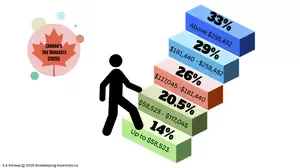
See how Canadian federal tax brackets work, what indexation does, and which provinces allow bracket creep. A guide for self-employed workers.
Continue reading "Canadian Tax Brackets, Indexation & Bracket Creep"
Oct 28, 2026
Bank Of Canada Raises Interest Rates: What It Means for Self-Employed Canadians
Bank of Canada raised its policy interest rate by 25 basis points to 2.5%.
This is the first increase since July 2023. It ends a long run of holds at 2.25%. The Bank Rate is now 2.75% and the deposit rate is 2.45%.
The reason is energy prices. The conflict in the Middle East is now in its eighth month, and oil prices are expected to stay high for longer. CPI inflation has been around 3% since April. The Bank expects it to reach about 3½% by the end of the year. Excluding gasoline, inflation was 2.2% in September, but the Bank says cost pressures are building. Businesses have mostly absorbed higher input costs so far. The Bank expects more of those costs to be passed on to customers over the next year.
The economy is holding up better than expected. GDP grew 3.3% in the second quarter, and unemployment has been around 6½% for several months. New US tariffs are expected to slow growth in the fourth quarter. The Bank still sees a recovery in 2027.
For self-employed Canadians, the immediate impact is on borrowing. Variable-rate loans and lines of credit usually follow the policy rate, so interest costs may start to climb. The Bank also said more increases could be needed, but it will take decisions one meeting at a time. The next announcement is December 9.
That makes this a good time to review your debt. List what you owe, what each loan or line of credit costs, and how much a higher rate would add to your payments. Then look at your cash flow. If your fuel, supplier or shipping costs are rising, check whether your prices still cover them. Accurate, up-to-date books make this much easier to see.
I’ll continue to monitor Bank of Canada announcements and share updates that matter to Canadian small business owners.
Source: Bank of Canada News Release, October 28, 2026, "Bank of Canada raises the policy rate by 25 basis points to 2½%
Continue reading "Bank Of Canada Raises Interest Rates: What It Means for Self-Employed Canadians"
Oct 21, 2026
Tax Compliance for Small Business | Canadian Filing Deadlines

Tax compliance filing deadlines for small business owners - GST HST returns, payroll remittances, income tax returns and instalment payments, subcontractors
Continue reading "Tax Compliance for Small Business | Canadian Filing Deadlines"
Oct 21, 2026
Canadian Small Business Tax Obligations | It's All About The Rules
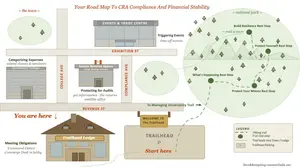
Deadlines, rates, thresholds. A quick “what applies to me” router for Canadian solopreneurs and small employers … simple habits that lead to audit-ready books.
Continue reading "Canadian Small Business Tax Obligations | It's All About The Rules"
Oct 08, 2026
Capital Asset Purchases and Depreciation for Canadian Solopreneurs

Learn how Canadian solopreneurs book equipment and furniture as capital assets, record depreciation, and why it differs from CCA on tax returns.
Continue reading "Capital Asset Purchases and Depreciation for Canadian Solopreneurs"
Oct 01, 2026
Minimum Wage Increases Take Effect Today in Five Jurisdictions
October 1, 2026
Five provinces raised their general minimum wage today. Here are the new hourly rates:
- Ontario: $17.95 (up from $17.60)
- Manitoba: $16.40 (up from $16.00)
- Nova Scotia: $17.00 (up from $16.75)
- Prince Edward Island: $17.30 (up from $17.00)
- Saskatchewan: $15.70 (up from $15.35)
Ontario and Manitoba adjust each year using provincial CPI. Saskatchewan's increase follows its own formula. Nova Scotia's is the second step of a two-part increase this year. PEI's is also the second step of a scheduled increase.
Alberta has no change. Its general rate remains $15.00, unchanged since October 2018.
Looking ahead: PEI has already confirmed its next step. The rate rises to $17.60 on April 1, 2027. Most other jurisdictions have not yet announced their 2027 rates.
If you hire help or pay yourself through a corporation, check which rate applies to your province. Remember that federally regulated employers follow the federal rate, which is currently $18.15.
Continue reading "Minimum Wage Increases Take Effect Today in Five Jurisdictions"
Sep 21, 2026
Loans and Debts | Understanding What Your Business Owes

A loan is not income. Follow along as Alex learns what debt is and where all the related affects show up on your financial statements.
Continue reading "Loans and Debts | Understanding What Your Business Owes"
Sep 17, 2026
2027 EI Premium Rates Released
On September 14th, the Canada Employment Insurance Commission confirmed the 2027 employment insurance (EI) premium rate.
Click below for the new rates.
Sep 09, 2026
Why Was GST Introduced in Canada? | Backgrounder

Why did Canada introduce GST/HST? Learn what tax it replaced, why the change mattered, and how GST/HST works as a value-added tax.
Continue reading "Why Was GST Introduced in Canada? | Backgrounder"
Sep 09, 2026
Canada U.S. Tariff Timeline 2025-2026 | Updates for Canadian Small Biz

Track Canada–U.S. tariff changes by date and sector, what’s in effect now, and simple next steps for Canadian solopreneurs (records, pricing, suppliers).
Continue reading "Canada U.S. Tariff Timeline 2025-2026 | Updates for Canadian Small Biz"
Sep 08, 2026
What’s Next? Building a 10-Year Plan in an Era of Trade Uncertainty

No one can predict how CUSMA's next chapter unfolds ... or the current trade war. Business owners can build a strategic plan based on today's economic and trade realities.
Continue reading "What’s Next? Building a 10-Year Plan in an Era of Trade Uncertainty"
Sep 05, 2026
What Is a Certified Professional Bookkeeper? And Why It Matters

What does CPB mean after a bookkeeper's name? Find out what the CPB designation tells you about a bookkeeper's knowledge, standards and current standing.
Continue reading "What Is a Certified Professional Bookkeeper? And Why It Matters"
Sep 05, 2026
Certificate vs Certification | Why the Difference Matters

Certificate vs. professional certification: What’s the difference, and what does each tell you about a bookkeeper? The distinction matters when you’re hiring one.
Continue reading "Certificate vs Certification | Why the Difference Matters"
Sep 02, 2026
Bank Of Canada Holds Interest Rates Again: What It Means for Self-Employed Canadians
Bank of Canada held interest rates steady at 2.25% for a seventh straight decision.
The central bank's tone has shifted since the last announcement. Growth actually came in stronger than expected, with GDP up 3.3% in the second quarter and unemployment easing to 6.4% in July. But the risk picture sharpened too. New US tariffs and Canadian counter-measures are now in effect following the breakdown of trade talks between Canada and the United States. The ongoing conflict in the Middle East continues to keep energy prices elevated. Together, these are pushing inflation risk higher rather than settling it near the Bank's 2% target.
For self-employed Canadians, the immediate impact is the same as last time: borrowing costs are staying put for now. That's still welcome news if you're carrying a loan or line of credit. But the underlying story has moved from "wait and see" to something closer to "watch closely." If tariffs and energy prices keep pushing inflation higher, a rate hike isn't off the table the way it seemed a couple of months ago.
That makes this a good moment to keep a close eye on cash flow, manage expenses carefully, and stay on top of your bookkeeping. It's easier to adjust when you can see clearly where you stand rather than reacting after the fact.
As economic conditions continue to evolve, maintaining accurate financial records will help you make informed business decisions, meet CRA reporting requirements, and be prepared for whatever comes next with interest rates or the broader economy.
I'll continue to monitor Bank of Canada announcements and share updates that matter to Canadian small business owners.
Source: Bank of Canada News Release, September 2, 2026, Bank of Canada maintains the policy rate at 2¼%.
Aug 28, 2026
Prescribed Interest Rates Hold Steady For Q4 2026
The CRA's prescribed interest rates remain unchanged for the fourth quarter of 2026.
As a home-based solopreneur, these rates touch your life in two different ways.
(1) If you owe the CRA money, interest accrues and compounds daily. So paying your unpaid tax balance down quickly saves you real money.
(2) It also has tax planning opportunities for income splitting.
Click here to see the rates for overdue taxes, shareholder loans, and spousal loans.
Continue reading "Prescribed Interest Rates Hold Steady For Q4 2026"
Aug 26, 2026
Canada Announces Cross Sector Counter-Tariffs
Canada's cross sector counter-tariffs go into effect September 8, 2026. I have created a table summarizing the 893 tariff items totalling $27.6 billion.
The counter-tariffs are Canada's response to the U.S. Section 338 50% tariffs blocking Canadian businesses from the American market. They aim to do the reverse ... restrict U.S. businesses' access to the Canadian market. This levels the playing field for Canadian businesses.
The items selected for counter tariffs are expected to have minimal effect on consumers in the short term. Unlike previous U.S. tariffs, the 338 tariffs will affect mainly SMEs (small medium enterprises).
Continue reading "Canada Announces Cross Sector Counter-Tariffs"
Aug 23, 2026
How Tariffs Impact Canadian Small Business | An Introductory Primer
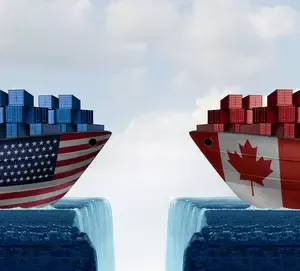
A practical primer on how tariffs impact Canadian small business. Covers basics, compliance, cash flow effects, and actionable steps to dealing with tariffs.
Continue reading "How Tariffs Impact Canadian Small Business | An Introductory Primer"
Aug 22, 2026
Section 338 Tariffs: What They Mean for Canadian Home-Based Businesses
An explainer: What Happened covers the facts. What It Means covers the practical impact on home-based businesses. What to Watch Next covers what could change.
Continue reading "Section 338 Tariffs: What They Mean for Canadian Home-Based Businesses"
Aug 22, 2026
Section 338 Tariffs Are In Effect
Breaking News:
Talks broke down between Canada and the U.S. late Friday night. Section 338 tariffs are in effect as of 12:01 a.m. Eastern Time on August 22, 2026. Unlike previous tariffs, CUSMA goods are not exempt.
Prime Minister Carney has said Canada will retaliate dollar for dollar. The government will introduce additional measures to support Canadian workers and businesses in the coming days.
Source: PMO, "Statement by Prime Minister Carney on Canada-U.S. trade negotiations". pm.gc.ca August 21, 2026
Aug 21, 2026
Tracking Canada's Trade Deals | What's Signed, What's Not

"Tracking the trade deals and economic opportunities Carney has brought home from his travels abroad."
Continue reading "Tracking Canada's Trade Deals | What's Signed, What's Not"
Aug 17, 2026
Cheating the System: How Transshipment Works
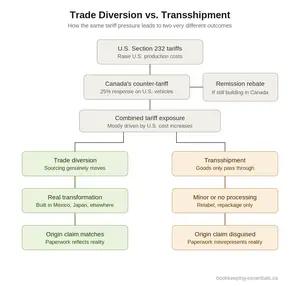
Not every rerouted shipment is trade diversion. Learn how transshipment works, why businesses do it, and how Canada's rules tell the two apart.
Continue reading "Cheating the System: How Transshipment Works"
Aug 09, 2026
Common T2 Schedules

I've compiled list of common T2 schedules that may be applicable to an average small business in Canada. We will look at schedules 1,2,3,4,6, 7, and 11.
Aug 08, 2026
Understanding Your T2: Tax Terms Explained For Small Business

Practical explanations of the tax terms you'll see on a Canadian T2 return. Written for small business owners, not tax specialists.
Continue reading "Understanding Your T2: Tax Terms Explained For Small Business"
Aug 08, 2026
How To Make A CRA Payroll Payment Under Protest

Disagree with a CRA payroll assessment? Pay the balance under protest to stop interest while you file a formal dispute. One example, step by step.
Continue reading "How To Make A CRA Payroll Payment Under Protest"
Jul 30, 2026
The Concierge Desk | Because Some People Just Belong Here

Some visitors do not need a map. They have been here before. They know what they need or they are happy to browse until something catches their eye.
Continue reading "The Concierge Desk | Because Some People Just Belong Here"
Jul 29, 2026
The Six Stages of a Trade Deal | Explainer For Canadian Solopreneurs

Why does it take the Prime Minister years to land a signed trade deal? An explainer to the six stages every trade agreement goes through.
Continue reading "The Six Stages of a Trade Deal | Explainer For Canadian Solopreneurs"
Jul 27, 2026
How Tariffs Actually Move Supply Chains | A Case Study

Why did U.S. auto exports to Canada fall 22%? This case study explains why businesses optimize globally, not politically ... and how supply chains change.
Continue reading "How Tariffs Actually Move Supply Chains | A Case Study"