- A Roadmap To CRA Compliance and Financial Stability
- Navigating Change
- What's Happening
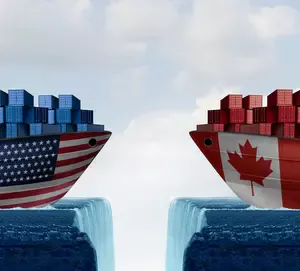
- Canada's changing trade strategy
Why Canada Is Changing Its Trade Strategy
What Small Businesses Need to Know

By L.Kenway BComm CPB Retired
This is the year you get all your ducks in a row! Start by starting ... and keep it simple. Consistency beats perfection.
Published February 2, 2026 | Updated February 3, 2026 | Edited February 7, 2026
WHAT'S IN THIS ARTICLE
TOC | Introduction | At A Glance | 1. What Carney Actually Said | What That Means in Plain English | 2. What Canada Has Already Done | First Ministers Align | 3. What This Means For Your Business | The Long Game | What You Can Do | 4. Bottom Line | FAQ
NEXT >> If You're New To The Topic Start With The Tariff Primer
BACK TO >> Navigating Change During Uncertainty
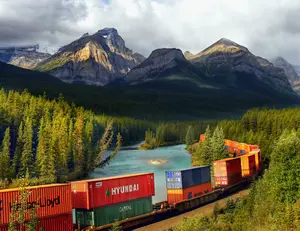
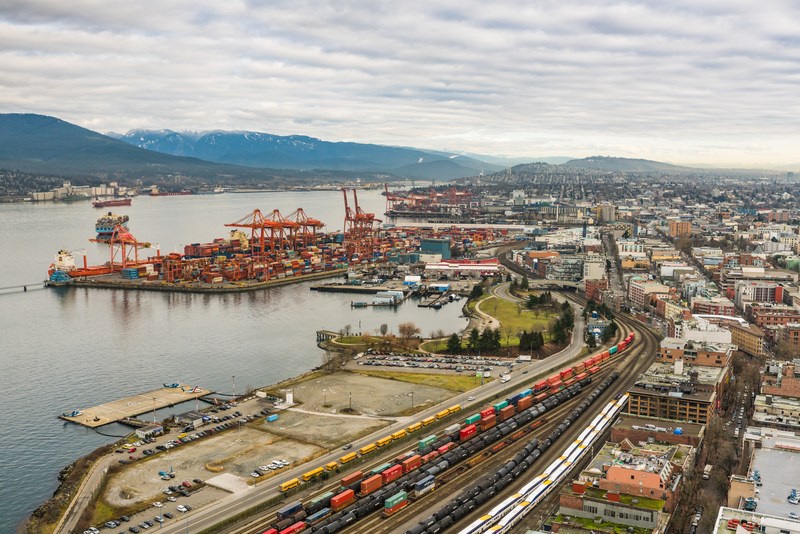 Port of Vancouver - Canada is diversifying trade away from U.S. dependence
Canada's Shifting Trade Strategy In Uncertain Times
Table of Contents
Introduction
Section 1 - What Was Said (The Headlines)
- 1. What Carney Said in Davos
- 2. What That Means in Plain English
- Sidebar: Quick Reference - The Policies You're Hearing About
Section 2 - What's Already Moving (The Policy Track)
Section 3 - What It Means For You (Small Business View)
- 1. What This Means For Your Business
- Sidebar: Things Worth Thinking About Over the Next Few Months
- 2. The Long Game
- 3. What You Can Do
Wrap Up
- Bottom Line
- Side bar: A Word About Timing
- Frequently Asked Questions - 3 clusters
FAQ Cluster#1: Understanding the Economics:
- What was life like before NAFTA, and would we really collapse without CUSMA
- What's the difference between trade volume, trade deficit, and trade dependence?
- Has any other country done what Canada is trying to do?
- What's a tariff, really, and why does it matter more now than before?
FAQ Cluster#2: Canada's Strategy In Context
- Is this just about trade, or is there a security angle too?
- Why is Carney being compared to Europe instead of the U.S.?
- Why does the Arctic keep coming up in trade and security discussions?
- What are 'critical minerals' and why does Canada's supply matter?
FAQ Cluster#3:
- How do I know if I'm too dependent on U.S. trade, and what should I do about it?
- Should I be worried about the Canadian dollar?
- Do I need to worry about CUSMA compliance and tariffs?
- Should I be changing my prices now?
- What should I be tracking in my bookkeeping?
Prime Minister (PM) Carney attended The World Economic Forum in Davos Switzerland last week. I don't know about you but I often struggle to understand what moves Canada's economy both domestically and within the global playing field. So after the PM's speech, I wanted to gain a clearer understanding of why he was saying what he did.
The only way I could think to get a better understanding was to research my list of questions (often dealing with background and history) to see if I could get on board with the direction the PM is taking our country from a non-political point of view. I wanted to figure out how this was going to affect small businesses. So I thought I'd share what I found.
Note: This article reflects the situation as of February 2, 2026, based on publicly available information at that time.
At a Glance: What Canada's Changing Trade Strategy Means for Your Small Business
What's changing
Canada is working on diversifying trade away from heavy U.S. dependence (76% of exports). PM Carney has signed 12 new trade and security deals in six months across Asia, Europe, Latin America, and Africa (four continents). He has set a goal to double Canada’s non-United States (non-U.S.) exports within the next decade. Some analysts note it will require significant, urgent upgrades to Canadian infrastructure to succeed.
Who's most affected
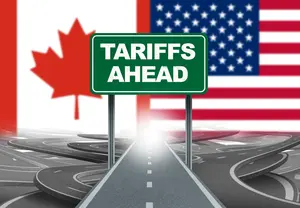
Businesses that sell to or buy from the U.S., especially in autos, steel, lumber, food, and manufacturing. But even if you're not directly involved in cross-border trade, currency swings and input costs will ripple through. You'll find a full list on my trade tariff timeline.
What to do now
- Track your U.S. exposure. Set up a separate income account for U.S. sales so you know exactly how much of your revenue is at risk.
- Explore alternatives. Start building relationships with Canadian or other non-U.S. suppliers and customers ... even if you don't switch right away.
- Stay flexible. Add 'supplier diversity check' to your quarterly review. Don't bet everything on U.S. market access staying exactly as it is.
Bottom line
This is a slow shift, not a sudden cliff. You have time to adapt ... but only if you're paying attention. Think of it like weather. You don't need to be a meteorologist, but you should check the forecast.
Here's what I was trying to wrap my head around:
- What does Canada's dependence on U.S. trade actually look like? And what happens to our way of life if CUSMA isn't renewed? (This was my baseline concern.)
- What is the PM is trying to do? His plan gets criticized constantly, so I'm having trouble deciphering these complex ideas. What does 'resilience' and 'plurilateralism' actually mean for us? (I'm trying to understand his strategy and decode his buzzwords without political bias and noise.)
- How do other countries handle this? I looked mainly at the EU and Australia. They have different strategies with different costs. What is it we can learn, and what will it cost Canadians if we shift direction? (I was looking for comparisons on how other countries have handled this and what lessons they learned. Why reinvent the wheel?)
- What happens if the PM's plan fails ... or if we do nothing? How do all these recent agreements he's made make us more resilient? (Short answer - he's building a diversified portfolio for Canada. That I can understand.)
So the following article is about me sharing with you what my research said about all my confusion and curiosity about our current economic environment. I didn't look at it from a political perspective. I looked at it at how it affects my life (and yours) in Canada today?
One last thing. Now that I'm retired, I actually have time to watch the news and dig into this stuff ... something I was too busy to do when I was working. So fair warning. This article is just my understanding as I work through it. I may have gotten some things wrong, or only scratched the surface of something very complex. But I figured if I'm confused, you might be too.
The elephant has rolled over and taken the blanket.
Dr. Andrew Furey
14th Premier of Newfoundland and Labrador
1.1 What Carney Actually Said
Last week in Davos, Prime Minister Carney gave a speech that got a rare standing ovation.[1 Global News] The World Economic Forum's published the speech in full. Their summary of his speech [2 WEF] says:
- Carney emphasized the end of the rules-based international order and outlined how Canada was adapting by building strategic autonomy while maintaining values like human rights and sovereignty.
- The Canadian PM called for middle powers, such as his own, to work together to counter the rise of hard power and the great power rivalry, in order to build a more cooperative, resilient world.
"We are engaging broadly, strategically, with open eyes. We actively take on the world as it is, not wait for the world as we wish it to be."
Prime Minister Mark Carney
Davos January 20, 2026
He wasn't promising quick fixes. He was saying something harder. The old rules aren't working anymore, and Canada needs to adapt.
Here's what I see he's doing:
- Changing Canada's approach to setting policy ... his premise is to take the world as it is, not as we wish it to be (a significant shift in tone from the previous administration).
- Removing internal trade barriers (like the absurdity of BC wine being harder to sell in Ontario than California wine or tradespeople and health professionals not being able to practice in other provinces) ... but this requires provincial cooperation.
- Diversifying trade partners (less U.S., more EU, Asia, Latin America).
- Building middle-power alliances (countries like us who can't dominate the system but can shape it together).
If that sounds vague, don't worry. I'll translate what it means for your business.
1.2 What That Means in Plain English
"The question for Canada is not how we feel about what the U.S. is doing, it is how will we adapt."
The Right Honourable Stephen Harper, 22nd Prime Minister of Canada
Ottawa, February 5, 2026
Here's the uncomfortable truth. Canada sends 76% of its exports to the U.S. That's not new. We were already at 70-80% before NAFTA in the 1990s.
But here's what changed. We haven't really traded MORE with the U.S. since NAFTA. What we did was integrate our entire economy with theirs. Supply chains cross the border 5-7 times for a single product. We optimized for speed and cost, not resilience.
That worked great ... until the U.S. started using trade as a weapon. Tariffs. Threats. Unpredictability. Suddenly, all that efficiency became fragility ... a double edged sword so to speak.
Carney's strategy isn't about cutting ties with the U.S.. It's about making sure Canada can survive and be resilient if the U.S. decides to squeeze us.
Business 101 is manage risk through diversification. It involves:
- A diverse customer base (not just a few big clients);
- Geographic diversity when possible (not all in one region); and
- Multiple suppliers (not dependent on one source).
As a business owner, you already understand this principle. And if you didn't, you are probably learning it now in real time. You shouldn't rely on just one or two big customers. Why? If they leave, you're in trouble. You need more than one supplier for critical inputs. Why? If they can't deliver, your business stops.
What Carney is doing at the national level is exactly what you'd do in your own business. He is reducing single-point failure risk. Canada isn't abandoning the U.S. market. We're just making sure we're not completely hostage to it.
Is this approach new? Not entirely. Stephen Harper's government (2006-2015) pursued similar trade diversification under the banner of "enlightened sovereignty" ... signing 11 FTAs over 9 years to reduce U.S. dependence. The result? Canada's U.S. export share dropped from 79% to 76% ... just 3 percentage points. What's different now is context and urgency. Harper operated in a cooperative global environment and urged nations to avoid protectionism. Carney is responding to active U.S. protectionism in a fractured world ... and moving much faster (12 deals in 6 months). Interestingly, Harper himself has recently (February 5, 2026) endorsed this direction, stating that Canada can no longer be a "captive supplier" to a "hostile" U.S. market and must diversify trade partners and increase defence spending to protect Canadian sovereignty. Whether Carney succeeds where Harper had modest results depends on execution ... and whether the current volatile environment creates the conditions for faster change.
The Policies You're Hearing About (Quick Reference)
If you've been following the news, here are the main policies Carney's government has put in place and where they show up in this article:
- One Canadian Economy Act - Removes internal trade barriers (Section 3: Domestically)
- Export Diversification Strategy - The 12 trade deals across Asia, Europe, Latin America, Africa (Section 3: Asia-Pacific, EU, etc.)
- Steel Import Quotas - Protects Canadian steel producers from dumping (Section 3: Domestically)
- NORAD Modernization - Arctic defence and the Australia radar deal (Section 3: Australia, Arctic Defence)
- Critical Minerals Strategy - Partnerships with Australia, EU, and Chile (Section 3: Australia, Chile)
You don't need to memorize these. But if you hear them in the news, now you know where they fit.
2.1 What Canada Has Already Done
Carney was elected and sworn in as the leader of the Liberal Party of Canada on March 9, 2025 after Justin Trudeau resigned in January. He won the federal election on April 29, 2025. So what has Carney actually done since being elected?
In a January 27, 2026 scrum interview, he put a number on it. Many news articles report that his government signed 12 new trade and security deals on four continents in six months. [3 PMO]
In my opinion, that's not slow, cautious diplomacy. That's strategic momentum. Think about how much hustling was done last year. Would you have been able to keep that pace?
I had to do some digging to find the list. Of those 12 deals, some are signed and in force. Here's what those deals actually are and why they matter ... broken down by region.
Asia-Pacific (The Biggest Focus)
Canada's already part of the CPTPP (the Comprehensive and Progressive Agreement for Trans-Pacific Partnership) which includes Japan, Australia, Vietnam, Singapore, Malaysia, and others. That agreement came into force in 2018, so it's not new. But it's the foundation that makes these next moves to deepen our relationships easier.
- South Korea: Two major agreements - a Security and Defence Cooperation Partnership and an intelligence-sharing agreement. Korea is a key ally in the Indo-Pacific and a major advanced manufacturing hub.
- Indonesia: Three deals - a Comprehensive Economic Partnership Agreement (CEPA), a Business Council Agreement, and a Defence Cooperation Agreement. Indonesia is the largest economy in Southeast Asia and a critical partner for supply chain diversification.
- Thailand: Canada launched free trade negotiations. Thailand is a manufacturing hub and an ASEAN (The Association of Southeast Asian Nations) member.
- China: A preliminary agreement to resolve tariff disputes on canola, lobsters, peas, and electric vehicles. This is pragmatic, not ideological. Canada needs markets. China needs food and clean energy tech.
In January, 2026, China trade was reset. It's important to note that China is a non-FTA country. Canada cut tariffs on Chinese EVs from 100% to 6.1%. In return, China cut tariffs on Canadian canola and other ag exports. Is this values-first diplomacy? No. It's pragmatic. We need markets, they need food and energy tech. - India: We're in early trade talks with India. Carney is scheduled to visit India again in March 2026. So it's not a deal yet but keep your eye on this one. It is estimated the deal will be finalized in early 2027.
- Ongoing FTA (free trade agreement) negotiations: ASEAN members are already in CPTPP, but this would be a direct Canada-ASEAN agreement), and also a bilateral FTA with the Philippines. The aim is to deepen economic ties beyond existing agreements.
- Australia: This one's more than just talk. In March 2025, Canada announced a C$6 billion partnership with Australia to purchase and develop advanced Over-the-Horizon Radar (OTHR) technology for Arctic defence. We're adapting the technology behind Australia's world-class Jindalee radar system to create a specialized Arctic radar network, with initial capability expected by 2029. This deal is part of NORAD modernization which I'll touch on in a minute.
The Ottawa Citizen reported on September 4, 2025 that "Canada and Australia signed a partnership agreement on June 20 for the development of the Canadian A-OTHR capability. Stage one of the A-OTHR program will provide an initial capability by the end of 2029." [4]
Why does this matter? Because it's part of NORAD modernization, the $38.6 billion investment to upgrade North America's early warning systems. [7 National Defence] And it shows Canada is building defence partnerships with like-minded middle powers, not just relying on the U.S.. Australia has some of the best long-range surveillance technology in the world, and it seems smart to me to partner with them.
Beyond radar, Canada and Australia have also signed agreements on critical minerals (reducing dependence on China) and we're coordinating closely on Indo-Pacific strategy. Think of Australia as a like-minded middle power facing similar challenges ... too dependent on one big partner (China for them, the U.S. for us).
European Union
We already had CETA (the trade agreement from 2017), but in 2024-2025 we've gone deeper. The EU is now Canada's second-largest trading partner after the U.S..
A Comprehensive Strategic Partnership that goes beyond the existing CETA trade deal includes:
- Security and Defence Partnership (SDP) enhances cooperation in crisis management, cybersecurity, and military procurement
- Joining the EU's defence procurement arrangements SAFE (Security Action for Europe)
- Critical minerals cooperation
- Clean energy and hydrogen partnerships
- Regulatory alignment on digital trade and AI
- Coalition of the willing (focuses on Ukraine)
This isn't just about trade. It's about integrating Canada into European security and industrial strategy. It's driven by Europe and Canada needing to take more responsibility and burden for their own defence.
United Kingdom
We've had a basic trade agreement since Brexit, but we're now negotiating something more ambitious to cover digital trade, financial services, and defence procurement. The UK is also talking to Canada about joining parts of AUKUS (the Australia-UK-US security pact), especially on AI and cyber defence.
Middle East
- Qatar: A strategic partnership focused on capital, energy security, and long-term infrastructure investment. Qatar's sovereign wealth fund can finance the kind of projects (greenhouses, ports, clean energy) that Canada needs but can't always fund domestically.
- United Arab Emirates: A Foreign Investment Promotion and Protection Agreement (FIPA) to facilitate two-way investment.
Latin America
- Chile: A renewed Strategic Partnership Framework focusing on critical minerals, clean energy, and trade. Chile is a major lithium producer which is critical for batteries and EVs.
- Mercosur (Brazil, Argentina, Uruguay, Paraguay): Negotiations are underway. This is a long-term bet on South American markets. It won't pay off next year, but in 10 years it could matter a lot.
South Africa
At the G20 summit in November 2025, negotiations concluded on the Canada-South Africa Nuclear Cooperation Agreement.
It was also announced the following initiatives which are aimed at strengthening economic ties and diversifying investment, with a focus on clean energy, mining, and technology:
- Foreign Investment Promotion and Protection Agreement (FIPA): Launched discussions toward a FIPA to create a more predictable environment for two-way investment, particularly in critical minerals and clean energy.
- Critical Minerals Collaboration: South Africa publically endorsed the G7 Critical Minerals Action Plan and Roadmap to build resilient supply chains.
- Trade Mission: Agreed to host a South African trade mission in Canada in 2026 for the Ag in Motion trade fair.
Domestically
- One Canadian Economy Act
This tackles the embarrassing reality that it's easier to sell BC wine in California than in Ontario. Or it's easier to transport goods north/south than east/west due to differing provincial transportation regulations. Or how trades people and professionals like doctors, nurses, lawyers, etc. can't easily move to another province. Removing internal trade barriers makes Canadian businesses more competitive everywhere. - Steel quotas (November 2025)
Canada set strict limits on steel imports to protect domestic producers from Chinese dumping through Mexico. Once the quarterly quota is full, imports face a 50% surtax. This isn't protectionism. It's preventing a race to the bottom. - Arctic defence
Canada is investing in icebreakers, drones, and surveillance ... not because we're at war, but because presence matters. Climate change is opening up the Arctic waters. If we're not there, someone else will be.
The Australia radar deal is the biggest piece of this, but it's not the only one. We're coordinating closely with other Arctic democracies ... Norway, Denmark (Greenland), Iceland, Sweden, and Finland ... mostly through NATO but also through informal partnerships. These countries understand what Canada is facing - a warming Arctic, increased shipping, Russian military activity, and Chinese interest in Arctic resources and routes.
This isn't about militarizing the Arctic. It's about making sure Canada can see what's happening in our own backyard ... and respond if we need to.
Remember from my primer on the impact of tariffs where I introduced the concept of business intelligence (gathering information that affects your operations, regardless of whether it's political or not)? So when people say Carney isn't doing anything, keep this list in mind because with regards your business, it's not what political stripe you are, it's how Carney's strategy and implementation of that plan. 12 deals. 6 months. 4 continents.
Of those 12 deals, some are signed and in force. Others are frameworks or launched negotiations. So let's remember and put this in perspective. Six months ago, none of this existed. Now it does. That's momentum.
None of these partnerships will replace 76% of our exports to the U.S. overnight. But they don't have to. They just need to give Canada enough options that we're not completely hostage to one market.
And from what I'm seeing, that's exactly what's happening. We are moving towards resilience. While everyone was watching the U.S. trade drama, Canada was quietly building relationships beyond the U.S..
I want to note that Carney is building on the FTAs the Harper government negotiated which include Peru, Colombia, Jordan, Panama, Honduras, South Korea, Ukraine and the European Free Trade Association (EFTA) member states of Iceland, Liechtenstein, Norway and Switzerland. This was in addition to TPP, and CETA and many FIPAs (Foreign Investment Promotion and Protection Agreement).
2.2 What Happened Last Week: First Ministers Align
On January 29, 2026, Canada's First Ministers (the Prime Minister and all the Premiers) met in Ottawa and released a joint statement.
This matters because it shows the strategy I just described isn't just talk. It's coordinated action across federal and provincial governments.
Here's what they agreed to:
On trade diversification
- Double Canada's non-U.S. exports over the next decade.
- Launch a "Team Canada Trade Hub" to coordinate federal and provincial trade efforts.
- Continue supporting sectors hit by tariffs (lumber, steel, aluminum, autos, seafood, canola, pork)
On internal trade barriers
- Expand mutual recognition agreements to more sectors by end of 2026.
- Speed up labour mobility for regulated occupations (tradespersons, health, construction).
- Reduce trade barriers in food, agriculture, and alcoholic beverages.
On infrastructure and energy
- Fast-track major nation-building projects.
- Modernize electricity systems / grids to be more interconnected and affordable.
- Work toward net-zero electricity grid by 2050.
On CUSMA review
- Federal government will meet monthly with provinces/territories throughout the review process.
- Commitment to a coordinated approach.
The Prime Minister noted that in the last 6 months, Premiers have led 20 trade missions around the world. Combined with the federal government's 12 trade and security agreements, that's a significant driving force.
What this tells me
This isn't one level of government acting alone. Federal and provincial governments are coordinating which means:
- Resources are being pooled.
- Trade missions are being aligned.
- Internal barriers are being addressed (not fast enough for my liking).
- There's political will across party lines (at least for now).
That doesn't guarantee success. But it does show this is a serious, coordinated effort ... not just political rhetoric.
What this means for your business
The diversification strategy is real. The internal trade barrier work is real. The support for tariff-affected sectors is real.
Whether it all works remains to be seen. But the foundation is being poured ... and multiple levels of government are committed to it.
On cost of living
The day before this meeting, the Prime Minister announced new measures to address immediate affordability concerns because critics are right that people can't wait 5-10 years for long-term strategy to pay off.
The government introduced:
- A new Canada Groceries and Essentials Benefit (25% increase to the former GST Credit for 5 years, plus a one-time 50% boost this year).
- $500 million to help businesses absorb supply chain costs without passing them to consumers.
- $150 million Food Security Fund for small and medium enterprises.
- Tax incentives for greenhouse food production.
- $20 million for food banks.
Previously implemented was income tax cut (first marginal rate dropped from 15% to 14% in July 2025), cancellation of the federal carbon tax (April 2025), and housing initiatives ($13 billion "Build Canada Homes" agency), GST eliminated on new homes under $1M for first time home buyers (May 2025), and a $1.5 billion Rental Protection Fund (launched in 2025).
Is this enough? That depends on your situation. But it shows the government recognizes that long-term strategy alone doesn't pay the bills today. These measures are meant as a bridge to the future.
3.1 What This Means for Your Business
Okay, so what does this mean for you?
- If you sell to the U.S.
Start thinking about diversification. Not tomorrow, but over the next 3-5 years. Can you sell to Canadian customers? Can you explore other markets? The U.S. isn't going away, but it's not the ONLY option anymore. - If you buy from the U.S.
Look at Canadian suppliers. Yes, they might cost more upfront. But if tariffs hit or supply chains freeze, you'll be glad you have options. - If you're in a tariff-hit sector (autos, steel, lumber, copper, food)
This volatility is the new normal. Build flexibility into your pricing. Track your exposure. Don't assume things will 'go back to normal'. - If you're not directly affected
Watch for indirect impacts. Currency swings. Input costs. Customer confidence. Even if you don't export, you're still part of an economy that does.
Short-Term Relief, Long-Term Strategy
I want to take a minute to address the criticism around people can't wait 5-10 years for help. What about the cost of living today? Fair point. That's why the government is running two tracks simultaneously ... (1) the short term relief announced last week and discussed earlier in the article as well as (2) long term strategies around trade diversification, internal barrier removal, and infrastructure investment (everything I've covered so far).
The easiest way to understand this is to think of it like your own business. If cash flow is tight, you need immediate relief but you also need to fix the structural problem. The government is attempting both.
What this means for you
If you're in food production, distribution, or retail, the $150 million Food Security Fund might be relevant. If consumers have more money (direct payments, tax cuts), they have more to spend with businesses like yours. If you're a food producer considering expansion, the greenhouse tax incentive matters.
None of this solves everything. But it's context for why the government is pursuing immediate relief AND long-term restructuring simultaneously.
Things Worth Thinking About Over the Next Few Months
You don't need to do all of this ... or any of it ... right away. But here are some questions worth asking yourself over the next few months:
If you sell to the U.S.
- What percentage of my revenue comes from U.S. customers? (If it's over 50%, you're exposed.)
- Could I sell more to Canadian customers? Are there other markets I haven't explored?
If you buy from the U.S.
- Do I have a backup supplier, or at least know who they'd be?
- What would happen to my costs if tariffs hit my key inputs?
If you're in a tariff-affected sector (autos, steel, lumber, food)
- Am I tracking my cross-border exposure separately in my books?
- Have I stress-tested my pricing to see how much cushion I have if costs jump?
If you're not directly affected
- Am I watching for indirect impacts ... currency swings, customer confidence, input costs?
- Do I have a quarterly 'check-in' habit where I ask, "Has anything changed?"
You don't have to answer all of these today. But if you pick one or two and start thinking about them, you'll be ahead of most businesses.
3.2 The Long Game (Why This Looks Like "Nothing" Right Now)
Here's why I think some people say Carney isn't doing anything ... they're looking for quick wins.
But strategic change doesn't work that way. If you've ever built a business from scratch, you know this. The foundation work ... the boring stuff like setting up systems, building relationships, securing supply chains ... doesn't show up in quarterly results. But without it, nothing else works.
Right now, it's my opinion that Canada is pouring the foundation. Critics are asking, 'Where's the house?' But anyone who's built something knows. You don't see results until the foundation is done. And if you rush it? The whole thing collapses later.
The steel quotas took effect December 26, 2025, and Canadian steel producers are already seeing the benefit ... more competitive pricing, more contracts, more certainty. The government says this will unlock over $1 billion in new domestic demand for Canadian steel. [5 ISED]
We must preserve Canada, this country handed down to us by providence, preserved by our ancestors and held in trust for our descendants. We must make any sacrifice necessary to preserve the independence and the unity of this blessed land.
The Right Honourable Stephen Harper, P.C., C.C., A.O.E
22nd Prime Minister of Canada
But the FULL structural impacts, such as new mills, revitalized and expanded ports and trade corridors, thousands of jobs, regional economic growth, that takes years to build out. The protection is immediate. The transformation is gradual.
That's what I think critics miss. They want to see a new steel mill ribbon-cutting next month. But first you need the market conditions that make building that mill worth it. That's what these quotas create.
The reset of the China canola deal in January 2026 reverses 2025's punitive tariffs, but it doesn't undo the value deterioration and financial losses farmers already experienced. Commodity prices are still expected to be low in 2026. What it does provide is long-term market access restoring a $4 billion annual market that could matter a lot over the next decade. [6 Western Producer]
This is 5-10 year thinking, not 5-month thinking. As a business owner, you need to watch the current government's work from three perspectives - short term, mid-term, long term.
From all the research I did, here's what I think a visual timeline looks like. Keep in mind, it's just my estimate. As you read it from a business perspective, not a political perspective, remember today's critics are making 2026 judgements based on 2035 expectations.
- 2026: Agreements signed, quotas in place
- 2027-2028: Infrastructure starts being built, relationships deepen
- 2029-2030: New supply chains are operational
- 2031-2035: A measurable shift in trade patterns becomes visible
- 2036-2040: Structural transformation is fully visible, our economy is resilient whether Carney is still our prime minister ... or not.
4. Bottom Line
I know this all sounds heavy. Global trade strategy, geopolitical risk, supply chain resilience. These aren't the reasons most of you started your businesses. You started them to solve a problem, serve customers, build something meaningful.
But here's what I think. You don't need to become a trade policy expert. You just need to stay aware of the environment you're operating in. Think of it like weather. You don't need to be a meteorologist, but you should probably check the forecast before you plan an outdoor event.
It's the same principle here. Carney's Davos speech wasn't about inspiring small businesses. It was about signaling to the world that Canada is adapting to a new reality. Here's what is important for small businesses in Canada. You need to adapt too. Not by becoming a trade policy expert as I've mentioned, but by staying aware, staying flexible, and building resilience into your own business.
What I liked about the Davos speech was it finally gave me insight into Prime Minister Carney's strategic plan to rebuild Canada's resilience against economic shock and volatility. Prior to the Davos speech, it wasn't clear to me.
So in turmoil go back to the basics. You don't have to diversify your entire customer base this month. You don't have to find new suppliers for everything by next quarter.
But you can:
- Add 'supplier diversity check' to your quarterly review
- Reach out to one potential Canadian supplier this month
- Track your U.S. revenue separately so you know your exposure
Small steps. Consistent progress. That's how you build resilience ... one habit at a time. Chip away at your business goals.
Tariffs Series - Dealing With The New Normal
Table of Contents





A Word About Timing
The strategies outlined in this article assume Canada can act quickly. But we're in a minority Parliament, and some of these initiatives require legislation and cooperation across party lines.
I don't know if that will happen, or how fast.
My take? Don't wait for government to move. The practical steps in the FAQ below are things you can do now to protect your business, regardless of what happens in Ottawa.
Frequently Asked Questions
Some readers want the headlines so they can get back to running their business. Others need to understand the full picture before they can move forward. Both approaches are valid. Here are answers to the questions I myself was asking after Prime Minister's Davos speech. At times, I had to dig to get something I understood.
I've divided the questions into three clusters:
- Understanding The Economics - These answer 'big picture' questions about Canada's situation.
- Canada's Strategy In Context - This is where what Canada is actually doing and why it makes sense is explained.
- What This Means For Your Business - These are the practical, actionable questions.
Understanding the Economics
What was life like before NAFTA, and would we really collapse without CUSMA?
Understanding the Economics
What was life like before NAFTA, and would we really collapse without CUSMA?
What was life like before NAFTA? I found this fascinating, and it explains why people who remember the 1980s and early 1990s feel like something fundamental changed.
Before NAFTA, Canada and the U.S. traded finished goods. A car was built in Canada or the U.S., then sold across the border. There were tariffs (usually 5-15%), customs delays, and different production standards. This meant:
- Canadian prices were often 20-30% higher.
- Selection was narrower.
- Cross-border shopping was a thing because the price gaps were real.
- But we still had our own industries.
After NAFTA, something different happened. Instead of trading finished products, we integrated production. Now a single car part might cross the border 5-7 times during manufacturing. The engine is cast in Canada, machined in Michigan, assembled in Ontario, with electronics from Mexico.
This caused:
- Massive cost reductions (no tariffs on parts moving back and forth)
- Price convergence (same product, same supply chain, similar prices)
- Trade volumes exploded (because we're counting the same product multiple times as it crosses the border)
So before NAFTA, we had high trade dependence but segmented markets. After NAFTA, we have high trade dependence and integrated supply chains.
That's why modern tariffs feel more disruptive than old ones. Pre-NAFTA tariffs hit finished goods. Modern tariffs hit inputs mid-production and multiply costs across multiple border crossings.
For your business
If you import finished products, tariffs are annoying but straightforward. If you're part of an integrated supply chain, tariffs can hit you multiple times on the same product.
So would we really collapse without CUSMA? No. But some things would get more expensive and less convenient.
I remember what life was like before NAFTA (which became CUSMA). We had trade with the U.S., but it was different. Prices were higher. Selection was narrower. Cross-border shopping was a thing because the price gaps were real.
But we weren't living in poverty. We had cars, TVs, vacations. We just had fewer choices and paid a bit more for some things.
What's changed since then is that we've built our entire economy around INTEGRATED supply chains. Not just trade, but production that crosses the border 5-7 times for a single product. Unwinding that would be disruptive, especially for certain industries like autos, manufacturing. But it wouldn't be the end of the world.
I think of it like this. Canada without CUSMA would look more like it did in the 1980s. That would lead to fewer choices, higher prices, slower growth not national collapse.
Understanding the Economics
What's the difference between trade volume, trade deficit, and trade dependence?
Understanding the Economics
What's the difference between trade volume, trade deficit, and trade dependence?
Good question, because the numbers can be misleading. Let's start with trade volume vs dependence.
Trade volume is the dollar amount ... how much stuff we buy and sell. In 1993 (pre-NAFTA), Canada-U.S. trade was about $212 billion. In 2024, it's around $909 billion. That's a huge increase.
Trade dependence is the percentage ... how much of our total trade goes to one partner. In 1993, about 70-80% of Canadian exports went to the U.S. In 2024, it's about 76%.
See the difference? The volume exploded, but the dependence stayed roughly the same.
Here's why this matters for your business
If 80% of your revenue comes from one customer, you're dependent on them ... whether that's $10,000 or $1 million. The percentage tells you about risk. The dollar amount tells you about scale.
Canada's problem isn't that we trade with the U.S. It's that we haven't meaningfully reduced the percentage going to one market, even as the total pie got bigger.
Now let's look at trade deficit vs dependence. People confuse these all the time, so let's clear it up.
Trade deficit means you import more than you export. If Canada buys $100 billion from the U.S. and sells $80 billion to them, we have a $20 billion deficit.
Trade dependence means a large percentage of your trade goes to one partner, regardless of whether it's balanced.
You can have a trade surplus with the U.S. (we sell more than we buy) and still be dependent (if 76% of our exports go there). You can have a trade deficit with the U.S. (we buy more than we sell) and still be dependent.
Why this matters
Trade deficits are about money flow. Trade dependence is about leverage and options.
If 76% of your sales go to one customer, they have power over you ... even if you're profitable. That's Canada's situation. We're not 'losing' to the U.S. in trade. We're vulnerable because we don't have enough alternatives.
For your business
If you are not actively following a 'buy Canadian' policy ... don't worry about whether you buy more from the U.S. than you sell to them. Worry about what percentage of your revenue depends on U.S. customers. That's your risk exposure.
Understanding the Economics
Has any other country done what Canada is trying to do?
Understanding the Economics
Has any other country done what Canada is trying to do?
Yes, Australia. It's experience is instructive.
Australia and Canada are remarkably similar. Mid-sized populations, resource-rich, export-dependent, liberal democracies, security-aligned with the U.S.
What was Australia's path?
They became heavily dependent on China for exports (iron ore, coal, education). They enjoyed huge growth for two decades. China imposed sudden sanctions (2020-2022) over political disputes. Australia had to scramble to diversify under fire. It was painful and expensive, but they survived.
What was Canada's path?
We became heavily integrated with the U.S.. We enjoyed efficiency and prosperity through NAFTA and CUSMA. We are now experiencing U.S. trade coercion. We are trying to diversify BEFORE a full crisis.
What is the lesson?
Australia learned, 'Never let one buyer dominate your exports'. Canada is learning, 'Never let one system dominate your economy'.
Carney's approach looks a lot like Australia after the lesson. Diversify before you're forced to, not during a crisis.
Understanding the Economics
What's a tariff, really, and why does it matter more now than before?
Understanding the Economics
What's a tariff, really, and why does it matter more now than before?
A tariff is a tax on imports. Simple as that. If you import a $100 widget and there's a 10% tariff, you pay $110.
But here's what makes modern tariffs more painful than they used to be.
Before integrated supply chains
These tariffs were charged just on the final, finished good.
- Tariff hits once (on the finished product).
- You decide - absorb the cost, pass it to customers, or find another supplier.
- It's a one-time hit.
With integrated supply chains
These tariffs act as a "cascading" tax, where costs accumulate at each production stage, rather than just on the final, finished good.
- The same product crosses the border multiple times during production.
- A 10% tariff might hit the raw material, then the semi-finished part, then the final assembly.
- That 10% compounds into 30% or more by the time the product is done.
Example
Let's say steel is imported from the U.S. (10% tariff). It's formed into auto parts in Canada. Those parts go back to the U.S. for assembly (another 10% tariff). The finished car comes back to Canada for sale (another tariff).
The same steel got taxed three times.
This is why unwinding NAFTA/CUSMA would be so disruptive. It's not just about making trade more expensive. It's about breaking production systems that were built around zero friction.
For your business
Track where your inputs come from and how many times they might cross the border. The more integrated your supply chain, the more tariffs hurt.
Canada's Strategy In Context
Is this just about trade, or is there a security angle too?
Canada's Strategy In Context
Is this just about trade, or is there a security angle too?
Both ... and they're connected.
- The trade angle
Canada is creating the conditions for businesses to diversify export markets and supply chains. Carney can't force companies to find new customers or switch suppliers. But he can remove barriers, negotiate market access, and reduce the risk of doing business in new markets. - The security angle
Canada is investing in Arctic defence and stepping up our contribution to continental security. The big example is NORAD modernization. It is a joint Canada-U.S. commitment where Canada is investing $38.6 billion over the next 20 years to upgrade early warning systems, Arctic surveillance, and infrastructure. - Why are they connected?
Economic dependence creates security vulnerability. If one country controls your markets, your supply chains, or your critical infrastructure, they have leverage over you. That's not paranoia. It's how power works. - What does this mean for small businesses?
You probably don't need to worry about Arctic defence. But you do need to think about supply chain resilience, customer diversification, and not being completely dependent on one market or one supplier.
The same principles apply at every scale. Options = Resilience.
The $6 billion Australia radar deal is part of that. We're not replacing the U.S. partnership. We're strengthening our contribution to it so we're a more capable, equal partner rather than a dependent junior one.
Canada is also coordinating with NATO allies (Norway, Denmark/Greenland, Iceland, Sweden, Finland) on Arctic security. This isn't about distrust of the U.S.. It's about Canada taking responsibility for defending Canadian territory rather than outsourcing it.
This is about sovereignty and resilience. It's being able to see what's happening in our own backyard and respond if we need to. It's also about Canada finally stepping up after decades of underspending on U.S. defence.
Canada's Strategy in Context
Why is Carney being compared to Europe instead of the U.S.?
Canada's Strategy in Context
Why is Carney being compared to Europe instead of the U.S.?
Because Europe and North America integrated in fundamentally different ways, some think Carney is trying to shift Canada toward the European model.
What Europe did
- Integrated internally first (removed barriers between member countries).
- Built redundancy and resilience (even if it cost more).
- Avoided letting any one country dominate critical supply chains.
- Only then negotiated external trade deals as a bloc.
What North America did
- Integrated externally first (deep ties with the U.S.).
- Optimized for efficiency and lowest cost.
- Built supply chains that cross borders 5-7 times.
- Left internal barriers in place (provinces still restrict trade with each other).
The result is Europe has slightly higher costs, but much more resilient. North America has maximum efficiency but, maximum vulnerability.
Some people say Carney is trying to adopt Europe's logic without copying their institutions. His Davos speech calls its a web network. He wants Canada to:
- Fix internal barriers first (One Canadian Economy Act).
- Build redundancy (multiple trade partners).
- Accept slightly higher costs for more security.
This isn't about abandoning the U.S. market. It's about not being completely hostage to it ... which is exactly what Europe designed their system to avoid.
For your business
Think of it like insurance. You pay a bit more for coverage you hope you never need. That's what resilience costs.
Canada's Strategy in Context
Why does the Arctic keep coming up in trade and security discussions?
Canada's Strategy in Context
Why does the Arctic keep coming up in trade and security discussions?
Why does the Arctic matter for trade? Three reasons: shipping routes, resources, and sovereignty.
- New shipping routes
Climate change is opening the Northwest Passage and other Arctic waters. Ships can now travel between Europe and Asia through Canadian Arctic waters instead of going through the Panama or Suez canals. This is faster (saves days or weeks), cheaper (shorter distance = less fuel), and strategically important (whoever controls these routes has leverage). - Resources
The Arctic has oil and gas, critical minerals (rare earths, lithium, cobalt), and fish stocks moving north as waters warm. If Canada doesn't have a presence there, other countries will claim access. - Sovereignty
Here's an uncomfortable truth. In international law, presence matters. If you can't monitor, patrol, or respond in your own territory, other countries start treating it like it's open for business.
Russia already has dozens of Arctic bases. China calls itself a 'near-Arctic nation' (it's not) and wants access. The U.S. has been pressuring Canada to do more.
Why this matters for trade
If Canada can't control its own territory, it has less leverage in negotiations. It's the same principle as your business ... if you don't control your critical assets, someone else will.
For your business
Arctic trade routes are 5-10 years away from being routine. But if you export to Asia or Europe, keep an eye on this. Shorter shipping routes could change logistics costs significantly. I've started reading Canada may open a commercial waterway in the Northwest Passage as one way to establish presence.
And that's where NORAD comes in.
NORAD stands for North American Aerospace Defense Command. It's the joint Canada-U.S. system that watches for threats coming from the air or space ... missiles, bombers, now drones and hypersonic weapons.
It was created in 1958 during the Cold War, and it's been quietly protecting North America ever since.
Why it matters now
- The Arctic is warming, opening new shipping routes and access to resources.
- Russia and China are increasing their presence in the Arctic.
- Old radar systems can't detect modern threats (low-flying cruise missiles, hypersonic weapons).
- If Canada can't monitor its own territory, someone else will.
What Canada is doing
Investing $38.6 billion over 20 years to modernize NORAD, including new radar systems (like the $6 billion Australia partnership for Arctic radar), satellites and drones, and northern infrastructure (runways, ports, communications).
Why this connects to trade
Economic dependence creates security vulnerability. If you can't defend your own territory, you have less leverage in trade negotiations. Carney is saying Canada needs to be a capable, equal partner ... not a dependent junior one.
For your business
You probably don't need to worry about Arctic defence directly. But understand that security and trade are connected. A country that can't defend itself has less negotiating power.
Canada's Strategy in Context
What are 'critical minerals' and why does Canada's supply matter?
Canada's Strategy in Context
What are 'critical minerals' and why does Canada's supply matter?
Critical minerals are elements that are essential for modern technology but have limited sources. Think lithium (batteries), cobalt (batteries, electronics), rare earth elements (magnets, electronics, defence systems), graphite (batteries), and nickel (batteries, steel).
Why they're 'critical'
You can't make the stuff that is part of our society today - electric vehicles, smartphones, wind turbines, solar panels, or advanced weapons systems without them.
The problem
China controls 60-80% of global processing for most of these minerals. Even when they're mined elsewhere, they usually go to China for refining.
This gives China enormous leverage. They've already used it by blocking rare earth exports to Japan in 2010, threatening to cut off supplies to the U.S. during trade disputes.
Why Canada matters
Canada has significant deposits of many critical minerals. We're one of the few Western countries that could build a supply chain outside Chinese control. However it's currently hindered by high capital costs for junior miners, long approval timelines, and China’s ability to manipulate global prices to make new, non-Chinese projects financially unviable.
That's why you see Canada signing critical minerals agreements with Australia (they have them too), EU (they need them), U.S. (they need them), and Chile (they have lithium).
For your business
If you're in manufacturing, construction, or technology, critical minerals affect your input costs and supply chain security. Diversification away from China-dependent supply chains is happening slowly ... but it's starting to happen.
What This Means For Your Business
How do I know if I'm too dependent on U.S. trade, and what should I do about it?
What This Means For Your Business
How do I know if I'm too dependent on U.S. trade, and what should I do about it?
In my mind, you should ask yourself three questions around risk management and risk diversity specifically customer concentration, supplier concentration, and geographic concentration.
- What percentage of my revenue comes from U.S. customers? If it's more than 50%, you're exposed.
- What percentage of my critical supplies comes from U.S. sources? If you have only one or two suppliers for key inputs, you're vulnerable.
- Are my customers and suppliers mostly in one region or country? Diversification reduces risk.
What should you do?
- Track your U.S. revenue separately in your bookkeeping (use a separate income account or tag)
- List your critical suppliers and note where they're located.
- Identify alternatives NOW, even if you don't switch immediately.
- Build relationships with Canadian or other suppliers so you're not starting from zero if something changes.
This isn't about abandoning the U.S. market. It's about knowing your options so you're not scrambling if tariffs hit or supply chains freeze ... or the renewed CUSMA includes non-zero tariffs.
Should I stop doing business with the U.S.?
No. But you should consider if you need to reduce your dependence on the U.S..
This is basic business risk management. You wouldn't want 80% of your revenue coming from one or two customers, right? Same principle applies to geographic concentration.
What do you instead?
You need to choose your path. You have four options - exit the market, pass costs onto customers, absorb costs, become CUSMA compliant if you aren't already.
Keep your U.S. customers and suppliers (they're valuable!) if it's possible. But start building relationships elsewhere. Look possibly at 'Buy Canadian' customers, other export markets, alternative suppliers. Think in terms of diversification, not abandonment (if your path is to not exit the market).
The goal?
Make sure that if U.S. trade gets disrupted (tariffs, border delays, regulatory changes), you have options. You don't need to replace all your U.S. business. You just need to reduce single-point failure risk.
What This Means for Your Business
Should I be worried about the Canadian dollar?
What This Means for Your Business
Should I be worried about the Canadian dollar?
It's my opinion you should not be worried as much as being aware.
How trade tensions affect the dollar
When there's uncertainty about Canada-U.S. trade investors get nervous, money flows out of Canadian assets, and the Canadian dollar weakens.
A weaker dollar means
✅ Your exports to the U.S. become cheaper (good if you sell there).
❌ Your imports from the U.S. become more expensive (bad if you buy from there).
❌ Your purchasing power drops (travel, equipment, anything priced in USD).
What to do
- If you sell to the U.S., a weak CAD is actually helpful. Your products are more competitive. But don't assume it lasts ... currency swings both ways.
- If you buy from the U.S., budget for currency fluctuation (assume 5-10% swings), consider hedging if you have large purchases coming (talk to your bank) to proactively protect your finances against market fluctuations, or look at Canadian suppliers as a natural hedge.
If you invoice in USD
- Track exchange gains and losses (CRA requires this).
- Decide whether to pass currency changes to customers or absorb them.
- Consider a USD bank account to reduce conversion frequency.
Bottom line
Currency risk is part of doing cross-border business. You can't eliminate it, but you can manage it.
What This Means For Your Business
Do I need to worry about CUSMA compliance and tariffs?
What This Means For Your Business
Do I need to worry about CUSMA compliance and tariffs?
What's 'CUSMA compliance' and do I need to worry about it?
CUSMA (Canada-United States-Mexico Agreement) replaced NAFTA in 2020. It sets the rules for tariff-free trade between the three countries.
The key concept - Rules of Origin
Just because you're in Canada doesn't mean your product automatically qualifies for tariff-free treatment. The product has to meet 'rules of origin' meaning enough of it was made in North America.
You need to worry about this when you manufacture products and export them to the U.S. or Mexico and if you import inputs from outside North America, process them, then re-export
When you don't need to worry if you only sell domestically, you provide services (CUSMA mostly covers goods), you import finished goods for resale (you pay the tariff once, that's it).
What does CUSMA compliance mean?
You need to document that your product meets the rules of origin requirements. This usually means tracking where your inputs come from, calculating the North American content percentage, keeping records in case of audit.
If you're affected, talk to a customs broker. They can help you determine if your products qualify and what documentation you need.
Most small businesses don't need to worry about this unless they're manufacturing and exporting. If you are, get professional help ... the savings are worth it.
And if you're importing or exporting, here's how to know if a tariff applies ...
Every product has an HS code (Harmonized System code). This is a standardized international number that determines what tariffs apply.
There are a number of ways to find your HS code:
- Canada Border Services Agency website - They have a searchable database.
- Your supplier - If you're importing, ask your supplier ... they should know.
- Customs broker - They can classify products for you (worth it for complex items).
Once you have the HS code:
- Check the current tariff rate on the CBSA website.
- See if your product qualifies for CUSMA or other trade agreement benefits.
- Understand if any special rules apply (quotas, permits, restrictions).
Keep in mind:
HS codes can be specific. 'Steel pipe' might have different codes (and different tariffs) depending on diameter, wall thickness, coating, or end use.
Here's when might need to get help:
- If your product is complex or could fit multiple categories.
- If you're importing large volumes.
- If you're not sure whether CUSMA applies.
Bottom line:
Tariffs are product-specific, not industry-specific. You need to know your exact HS code to know what applies to you.
What This Means For Your Business
Should I be changing my prices now?
What This Means For Your Business
Should I be changing my prices now?
Maybe ... but don't panic.
First, understand your exposure:
- What percentage of your costs are affected by tariffs or trade uncertainty?
- Can you absorb it, or do you need to pass it on?
- What are your competitors doing?
You have four options that I discuss in detail in 'U.S. De Minimis Exemption Has Ended'.
- Absorb the cost (short term) or split the difference.
- Pass it on to customers.
- Exit the market.
- Become CUSMA compliant.
What This Means For Your Business
What should I be tracking in my bookkeeping?
What This Means For Your Business
What should I be tracking in my bookkeeping?
Track three things:
- Track U.S. revenue separately.
Use a separate income account for U.S. sales, or tag them in your accounting software. This lets you see at a glance what percentage of your income is exposed to U.S. trade risk. - Track exchange rate gains and losses.
If you bill or get paid in U.S. dollars, CRA requires you to track realized exchange gains and losses for your tax return. Trade tensions often move the CAD-USD rate, so this becomes more important. - Track Tariff and duty costs.
If you import from the U.S. (or export to the U.S.), track any tariff or duty costs separately. Don't just lump them under 'materials' or 'shipping. You need to know exactly how much tariffs are costing you so you can decide whether to pass costs on to customers or find alternative suppliers.
Why does this matters?
You can't manage what you don't measure. These three data points tell you how exposed you are and help you make informed decisions.
If you are behind in your bookkeeping, or feel you aren't organized enough with your paperwork, or you just want a reset because tariffs have thrown you for a loop, my article on a '30 Day Admin Reset' might help you exhale.
Sources and references
[1] Global News, "‘I meant what I said’: Carney says he did not walk back Davos speech to Trump", January 27, 2026 [https://globalnews.ca/news/11639360/carney-walked-back-davos-comments-call-trump/]
[2] World Economic Forum, "Davos 2026: Special address by Mark Carney, Prime Minister of Canada", January 20, 2026 [https://www.weforum.org/stories/2026/01/davos-2026-special-address-by-mark-carney-prime-minister-of-canada/]
[3] Prime Minister of Canada's Office, "Prime Minister Carney announces new measures to make groceries and other essentials more affordable for Canadians", January 26, 2026 [https://www.pm.gc.ca/en/news/speeches/2026/01/26/prime-minister-carney-announces-new-measures-make-groceries-and-other]
[4] The Ottawa Citizen, "Work expected to start in early 2026 on Canada's new missile defence radar", September 4, 2025 [https://ottawacitizen.com/public-service/defence-watch/canada-new-missile-defence-radar]
[5] Innovation, Science and Economic Development Canada, "Secretary of State Belanger highlights new measures to protect and transform Canada’s steel industry" November 28, 2025 [https://www.canada.ca/en/innovation-science-economic-development/news/2025/11/secretary-of-state-belanger-highlights-new-measures-to-protect-and-transform-canadas-steel-industry.html]
[6] The Western Producer, "Canola growers seek tariff compensation", January 16, 2026 [https://www.producer.com/daily/canola-growers-seek-tariff-compensation]
[7] Canada's National Defence, "NORAD modernization project timelines", November 22, 2024 [https://www.canada.ca/en/department-national-defence/services/operations/allies-partners/norad/norad-modernization-project-timelines.html]
Navigating Change Articles
How Tariffs Impact Canadian Small Business | An Introductory Primer
A practical primer on how tariffs impact Canadian small business. Covers basics, compliance, cash flow effects, and actionable steps to dealing with tariffs.
What’s Next? Building a 10-Year Plan in an Era of Trade Uncertainty
No one can predict how CUSMA's next chapter unfolds ... or the current trade war. Business owners can build a strategic plan based on today's economic and trade realities.
Protect Yourself from Financial Stress | Self-Employed Canada
Practical strategies to manage money stress, build financial resilience, and secure your retirement as a Canadian solopreneur. Move from stress to success.