- A Roadmap To CRA Compliance and Financial Stability
- Navigating Change
- What's Happening
What’s Happening: Canada’s Trade Shifts
What They Mean For Small Business So You Can Plan, Not Panic

By L.Kenway BComm CPB Retired
This is the year you get all your ducks in a row! Start by starting ... and keep it simple. Consistency beats perfection.
Published February 21, 2026 | Revised May 4, 2026 | Updated August 21, 2026
WHAT'S IN THIS ARTICLE
Introduction | How To Use This Page | What's Changing | Simple Monthly Habit | Next Steps | Terms Used
 Canada’s trade routes are shifting - Canada is building options beyond one market
Introduction to What's Happening
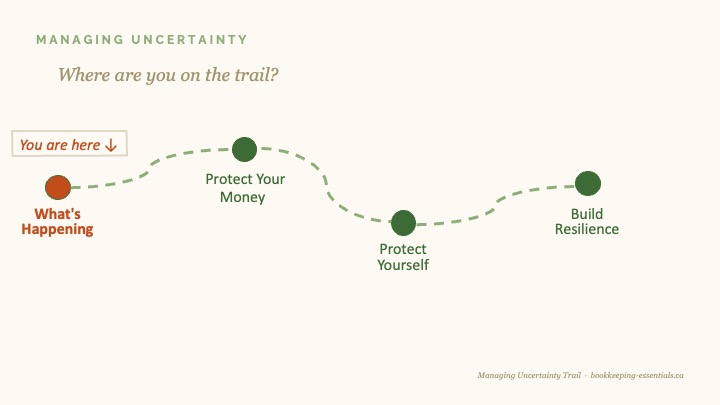 You are at the 1st rest stop on the journey to Managing Uncertainty.
There are four tents to choose from for your stay.
Understand the tariffs, the timeline, the strategy, the impact.
Phew. The last year and a bit has been a roller coaster ride. Actually, if you stop and think about it for a minute ... the last six years have been a roller coaster ride. The pandemic. Supply chain crises. Runaway inflation. And now a tariff trade war and an oil crisis playing out in real time across the whole world ... and you are living through every bit of it.
I retired right at the start of all this, which mucked up my retirement plans a little. Retirement has given me something I was looking forward to. Time. Time to read every morning, follow the news and political daytime TV shows. I have space to think about what all of it means for people like you who are still in the middle of it, running a business, trying to stay steady.
We are living through something that will be taught in your grandkids and great grandkids history classes. I am trying to figure it out right alongside you. So I thought I would share my notes and thoughts on Canada's changing trade strategy and what it might mean for your business.
If this is your first time here, fair warning. I am a chatterbox. Not because I like the sound of my own voice, but because I want to take you on a journey where you learn about your business where you establish natural rhythms in your business routines that keep you CRA compliant. I'm not a fan of handing out step-by-step checklists for the most part. What I prefer to do is present possible options or point you in a direction you can lean into. Every business is different but you know what's right for your business.
Let's figure out, and monitor where necessary, what the 'external' changes are doing and where they are going so you can navigate a safe path through them. You don’t need to become an expert. You just need enough awareness to make calm decisions and protect your margins.
If this describes you ... When you run a home-based business, freelancing, or a small online shop, you don’t have time to follow every headline. I get it. But when trade rules shift, costs jump, or cross-border shipping changes, it can hit your pricing, supply chain, and cash flow fast ... then you are in the right place.
So. Let's do this.
Start Here: Find Your Entry Point
This series has five articles. They don't all need to be read in order. Find your entry point below, then bookmark this page so you can come back when the next piece of the picture matters to you.
Jump To >> The Wobble Cards
A quick note on terms, so you do not let any of the fancy economic terms get in the way of what is being explained. On this page:
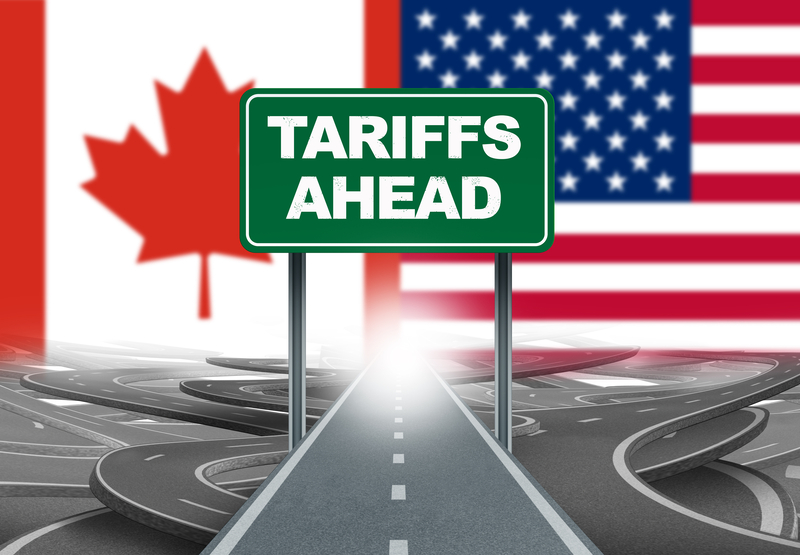
- Tariffs mean taxes charged on imported goods.
- Trade rules mean the rules, agreements, and border processes that affect buying, selling, or shipping across country borders.
- Cross-border shipping means sending goods between Canada and another country, especially the U.S..
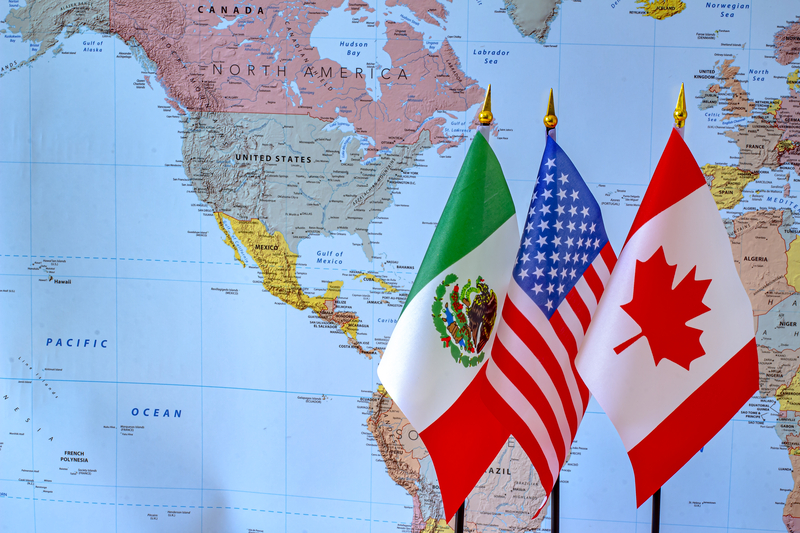
- CUSMA is the trade agreement between Canada, the U.S., and Mexico.
There's a more comprehensive glossary of Terms Used at the end of this page if I missed a term that gives you pause.
One more thing before we dive in. Not all my articles are meant to be read top to bottom. Think of them more like a reference book. Find what you need, use it, then get back to running your business.
There's so much noise about tariffs and trade. I don't know what actually applies to me.
You don't need to understand all of it. You need to understand the parts that touch your business. This series breaks it down for you ... what changed, why Canada is responding the way it is, and what it means if you ship, source, or sell across the border.
There's no wrong door here. Start wherever you are right now.
Getting Your Bearings
If the headlines are landing but the meaning isn't yet:
- Start with >> Tariff Primer
What tariffs actually are, why they're hitting Canadian small business right now, and what to watch for in your own numbers. - Then >> Canada-U.S. Tariff Timeline
A running record of what's changed, what's in effect, and what's still moving. Updated as events unfold. - Then >> Building a 10-Year Plan in an Era of Trade Uncertainty
Once you have your bearings, this walks through how to plan your business when the ground keeps shifting. Seven assumptions to work from, plus what they mean if you're home-based.
Understanding The Bigger Picture
If you want to understand why this is happening, not just what:
Why Canada Is Changing Its Trade Strategy - this is a deep read. Choose your entry point.
- Start with the Davos Speech - what Carney said and what it means for Canada
- See what Canada has already done - concrete actions not just promises
- Find out what this means for your business - impact, long game, and next steps
Set aside time for this one, or save it and come back. It rewards a full read when you're ready.
- Then >> Tracking Canada's Trade Deals
Here you will find PM Carney's strategy in action. Every agreement and partnership Canada has signed or is negotiating since he took office, organized by type. Not a read-through, a reference. Come back to it as deals move.
You Have A Specific Situation In Front Of You
If something has already changed for your business:
- Start with >> Duty-Free Shipping Is Over
What the end of the U.S. de minimis exemption means if you ship across the border, and four strategies to respond right now.
- Then >> CUSMA Review Primer
What the 2026 review is, what's being negotiated, and how to prepare before the uncertainty becomes a decision you have to make under pressure.
Things Move Fast And You Just Want The Latest
If you've already got your bearings and just need to know what's changed:
- Start with >> CUSMA July 1 Review: What Changes and What Doesn't
The review concluded July 1 — here's what actually shifted, what stayed the same, and what it means for your pricing and sourcing decisions. - Then >> Section 338 Tariffs: What They Mean For Canadian Home-Based Businesses
What this tariff category covers, who it actually hits, and how to tell if it touches your supply chain.
What's Happening (Visual Index)
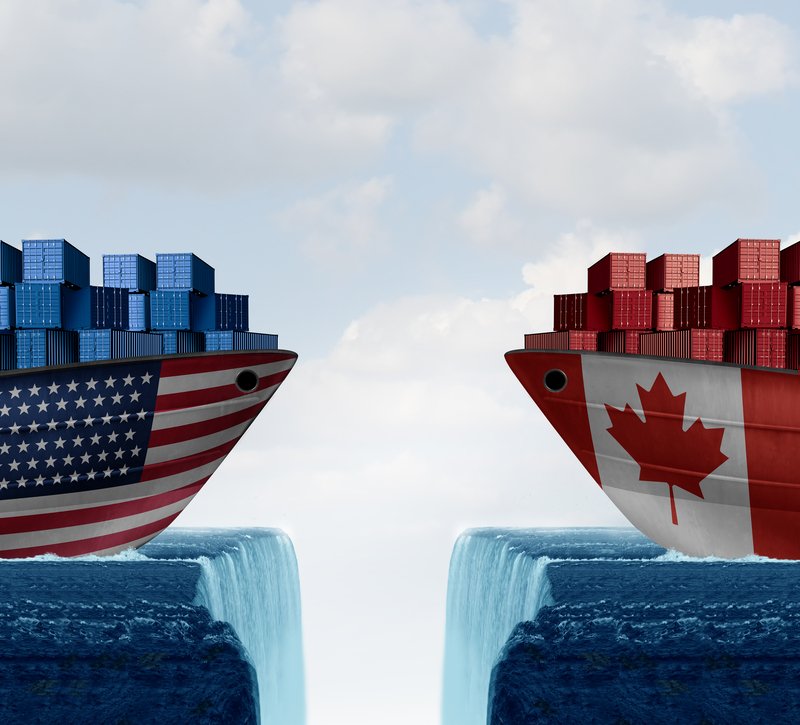
This series explains what’s changing so you can plan, not panic. It's how to deal with our 'new normal' during these uncertain times.
Trade rules, tariffs, and cross-border processes are shifting quickly these days ... and even if you don’t import or export directly, costs, supply chains, and the Canadian dollar can ripple through to your business.





A Simple Monthly Habit (5 minutes)
- Check one update (timeline or news source you trust).
- Ask: “Did anything change that affects my suppliers, shipping, pricing, or U.S. customers?”
- Track cross-border exposure separately in your books if it’s material.
- If costs moved, adjust pricing assumptions before you get squeezed.
- Then stop. Go run your business.
Next Steps: Protect Your Money and Yourself
- Protect Your Money (cash flow systems and compliance routines)
- Protect Yourself (stress, decision fatigue, and staying steady through uncertainty)
🦆 Note: This page will be updated as events change leading up to the CUSMA review.
Appendix: Terms For The Navigating Change Series
You do NOT need to know all this already. If a term keeps popping up and you’re not fully sure what it means, start here. This quick reference will help you make sense of the language used across the series.
Series 1: What's Happening - Trade and Tariff Terms
- Tariffs: Taxes on imported goods. For small businesses, they often show up as higher costs because unlike GST/HST, it is not revenue neutral (i.e. there are no input tax credits).
- De minimis: A rule for free shipping of low-value shipments. In practical terms, it used to help small packages cross the border without duties.
- CUSMA review: The 2026 review of the trade agreement between Canada, the U.S., and Mexico. It matters because trade rules affect pricing, sourcing, and planning. The U.S. refer to it as USCMA.
- Trade rules in flux: A fancy way of saying the business rules around cross-border trade are still changing, which makes planning harder.
Series 2: Protect Your Money - Cost and Cash Flow Terms
- Input costs: The cost of the things you need to buy to run or deliver your business. That can include raw materials, inventory, parts, packaging, software, or tools.
- Direct costs: Costs tied directly to what you sell. If you make or sell products, this could be materials, inventory, packaging, or shipping. If you provide services, it could include subcontractor time or project-specific tools.
- Indirect costs: Costs that support the business overall but are not tied to one specific sale. Think internet, bookkeeping software, insurance, office supplies, rent, or utilities.
- Operating costs: The ongoing costs of keeping the business running day to day. This includes both direct and indirect costs, depending on the business.
- Packaging and shipping costs: The cost of getting a product safely to the customer. That can include boxes, mailers, tape, labels, postage, courier charges, customs, brokerage, and related fees.
- Service business costs: If you do not sell physical products, your business still has inputs. These may include software, phone, internet, mileage, subcontractors, professional fees, or equipment needed to deliver your work.
- Pricing pressure: What happens when your costs go up but you cannot easily raise your prices without risking lost sales or unhappy customers.
- Margins: The portion of your sales income left after covering direct costs. When costs rise and prices stay the same, margins shrink. Or said another way, if your costs go up faster than your prices, your margins get squeezed.
- Cash flow: What money is coming in, what money is going out, and whether the timing works in real life. A business can look profitable on paper and still run into trouble if cash is tight because profit does not equal cash flow.
- Liquidity: How much cash, or near-cash, you have available to pay bills, taxes, payroll, and surprises without scrambling.
- Perfect Bookkeeping: A phrase sometimes used loosely to mean having flawless, audit-ready records at all times. On this site it means something more specific. Accuracy on what matters most. All sales reported. Major expenses captured and traceable. Tax obligations tracked. The goal is not perfection on every trivial transaction. It is accuracy where accuracy protects you.
Series 3: Protect Yourself - Stress and Money Terms
- Financial stress: The mental and emotional strain that comes from money pressure, uncertainty, debt, or not knowing what happens next.
- Avoidance: Putting off looking at your numbers, opening bank statements, dealing with bookkeeping, or making decisions because the stress feels too heavy.
- NSF fee: 'Non-sufficient funds' fee. A bank fee charged when a payment goes through but there isn’t enough money in the account to cover it. The payment is often charged back to your account.
- Personal financial stability: Having enough order in your own personal finances that business decisions are less likely to come from panic, fear, or desperation.
- Profit Margins: The same thing as margins. See Series Two.
- TFSA: Tax Free Savings Account
- RRSP: Registered Retirement Savings Plan
Series 4: Build Resilience - Systems and Record-Keeping Terms
- Financial resilience: Your ability to keep operating, adapt, and make steady decisions even when conditions stay uncertain and do not 'go back to normal'.
- CRA-ready: Organized enough that your reports are easier to file correctly and easier to defend if the Canada Revenue Agency ever asks questions. It focuses specifically on Canadian tax compliance and supporting your income and expense claims and other reporting obligations. It increases the likelihood of any future audits going smoothly.
- Audit-ready: Having organized, traceable financial records that are easy for an outside party to review, verify, and follow. It means your books are in good order for general compliance, review, or audit purposes.
- Audit-proofing: The proactive process of keeping clear, organized, well-documented records so your transactions are easy to verify and support if CRA or another regulator asks questions. It helps reduce stress, mistakes, and risk by creating a solid audit trail.
- Habit-based system: A way of managing your business that works with what you already tend to do naturally, instead of fighting it. For example, if you already check your bank balance to make money decisions, the system builds on that habit by separating your money into different accounts or “buckets” so you can see what is available for each purpose. It greatly reduces decision fatigue in a day.
- Solopreneur: A self-employed business owner running a business mainly on their own, with little or no staff.
Navigating Change Articles
How Tariffs Impact Canadian Small Business | An Introductory Primer
A practical primer on how tariffs impact Canadian small business. Covers basics, compliance, cash flow effects, and actionable steps to dealing with tariffs.
What’s Next? Building a 10-Year Plan in an Era of Trade Uncertainty
No one can predict how CUSMA's next chapter unfolds ... or the current trade war. Business owners can build a strategic plan based on today's economic and trade realities.
Why You Avoid Your Business Finances (Canada) | And How to Stop
Overwhelmed by bookkeeping? Avoiding your business finances? A simple, Canadian, non-judgmental path to audit-ready habits, even if you’re behind and stressed.