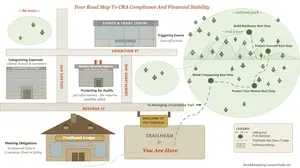
- A Roadmap To CRA Compliance and Financial Stability
- The Concierge Desk
- The Backgrounder Library
- What Signing Your Return Means
What Signing Your Tax Return Means In Canada
A Backgrounder Article | Drawer A: The Tax System - How It Works

By L.Kenway BComm CPB Retired
This is the year you get all your ducks in a row! Start by starting ... and keep it simple. Consistency beats perfection.
Published April 23, 2026
WHAT'S IN THIS ARTICLE
What It Means To Sign | Not A Formality | Still Responsible | A Hard Truth | What This Means In Practice | Before You Sign | If You Discover A Mistake Later | Bottom Line
NEXT >> Understanding The Audit Process In Canada
BACK TO >> The Backgrounder Card Catalogue
 Your Signature ... Your Responsibility
When you sign your income tax return (or file it electronically) you are confirming that the information in it is complete, accurate, and supportable to the best of your knowledge.
That sounds simple, but many taxpayers do not fully appreciate what it means.
In Canada's tax system, returns are based on self-assessment and self-reporting. The CRA expects you to report your income correctly, claim only the deductions and credits you are entitled to, and keep records that support what you filed.
Your signature is not a formality
Your signature is your acknowledgment that:
- the income reported is complete
- the deductions and credits claimed are supportable
- the return was prepared within the rules of Canadian tax law
- you understand you may be asked to support the numbers later
If the CRA reviews or audits your return, they are not only looking at what was filed. They are also looking at whether you can back it up with documents, receipts, records, and logs.
You are still responsible even if someone else prepared the return
This is the part many people do not realize. Even if your return was prepared by:
- an accountant
- a tax preparer
- a friend
- a spouse
- a family member
- tax software
you are still responsible for what was filed in your name.
Paying someone to prepare your return does not transfer legal responsibility to them. A competent professional can reduce errors and help you comply properly, but your signature means you are accepting responsibility for the final return.
That is why it is never wise to take a completely hands-off approach.
A hard truth: ignorance is generally not a defence
Many small business owners assume that if they misunderstood the rules, made a good-faith guess, or relied on bad advice, that will protect them.
Usually, it does not.
One hard truth in tax matters is that not knowing the rules is generally not a defence. Courts do not usually accept ignorance of tax obligations as an excuse for incorrect reporting.
That is why it is so important to:
- ask questions before filing
- keep supporting records as you go
- review your return before it is submitted
- correct mistakes quickly when you find them
What this means in practice for small business owners
If you are self-employed, signing your return carries even more weight because your return may include items that require judgment, documentation, and careful recordkeeping, such as:
- business income
- home office expenses
- vehicle expenses
- meals and entertainment
- GST/HST reporting
- payroll or contractor issues
These are exactly the kinds of areas where weak records or misunderstandings can lead to CRA questions later.
Before you sign a return, ask yourself:
- Do I understand where these numbers came from?
- Have I reported all my income?
- Can I support each deduction if CRA asks?
- Are any claims based on guesswork, estimates, or missing receipts?
- If someone else prepared this return, have I reviewed it carefully?
If the answer to any of these is 'no' or 'I'm not sure', stop and get clarification before filing.
If you discover a mistake later
Do not ignore it and hope it goes away.
If you realize after filing that income was missed or a claim was incorrect, deal with it promptly. In many cases, correcting the problem early is better than waiting for CRA to find it for you.
Bottom line
Signing your tax return means more than authorizing submission.
It means you are confirming that the return is accurate, that the claims are supportable, and that you accept responsibility for what was filed ... even if someone else prepared it.
That is why good bookkeeping, careful review, and asking questions before you file matter so much.
Related Reading
- Understanding Tax Audits in Canada
- Why You Should Amend a Tax Return When You Find an Error
- Business Record Retention Requirements
Backgrounder Articles
Canadian Bookkeeping Compliance Resource | Site Blueprint
A structural blueprint for the website making it easier for visitors to find what they are looking f
How Are Sole Proprietors Taxed In Canada | Marginal Tax Rate Explained
Knowing how sole proprietors are taxed provides motivation to have audit ready books. You're in a high risk group for getting audited. Learn about your marginal tax rates as well.
How Governments Raise Revenue | A Backgrounder
Discover the three ways governments raise revenue and why understanding Canadian tax policy helps you make better strategic decisions for your business.