- A Roadmap To CRA Compliance and Financial Stability
- The Concierge Desk
- The Backgrounder Library
- How Tariffs Move Supply Chains
How Tariffs Actually Move Supply Chains: A Case Study
A Backgrounder Article | Drawer E: The Economy - What's Behind The Headlines

By L.Kenway BComm CPB Retired
This is the year you get all your ducks in a row! Start by starting ... and keep it simple. Consistency beats perfection.
Published July 27, 2026
WHAT'S IN THIS ARTICLE
The Number Everyone's Citing | Two Forces, One Number | The Pattern In Practice | Why This Matters Beyond Auto Trade | What's Next
BACK TO >> The Backgrounder Library
RELATED >> Section 338 Tariffs | Canada's Next Move
The Number Everyone’s Citing
Businesses redesign supply chains in response to the combination of incentives, costs, and certainty. Not a single tariff or headline.
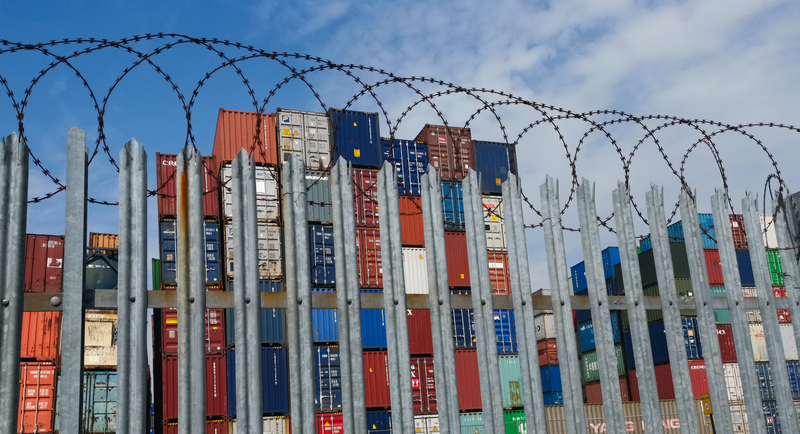 Tariffs don't just raise costs for everyone ... they change what actually moves, and where
When the White House announced its new Section 338 tariffs on Canadian goods in July 2026, one statistic anchored the case: U.S. auto exports to Canada had dropped 22% year-over-year for the 12 months ending March 2026. President Trump attributed the decline squarely to Canada’s retaliatory tariffs on U.S.-made cars, calling it a “scheme.“
That number is real. But according to reporting by Eric Atkins in The Globe and Mail, industry insiders say it’s only part of the story. Understanding why it’s incomplete is a useful lesson in how supply chains actually respond to trade pressure.
By the way, this article isn't really about cars. It's about a habit of thinking ... looking past the headline to the incentives that drive business decisions. I'm using the auto industry as a case study to illustrate how businesses react in real time.
By the end of this article, you'll understand how incentives shape business decisions, explain why manufacturers changed their supply chains during the Canada–U.S. trade dispute, and apply the same thinking to decisions in your own business.
Two Forces, One Number
This means the 22% decline wasn't caused by a single policy. It reflected two separate economic forces that happened to push companies in the same direction.
Trade experts interviewed by the Globe pointed to two separate mechanisms working at the same time, both triggered by the broader Canada-U.S. trade war ... not just Canadian policy.
Mechanism 1: Canada’s tariffs did exactly what they were designed to do.
Canada’s own tariffs on U.S.-made cars of 25%, imposed since April 2025, were structured with a “remissions framework” that spares manufacturers who produce and invest in Canada. The policy was explicitly designed to encourage automakers to build in Canada rather than import from the U.S.
Andrew King, managing partner of DesRosiers Automotive Consultants said the figures suggest the policy is working as intended ... automakers without remission programs have shifted vehicle sourcing to alternative markets wherever possible.
Mechanism 2: Trump’s own tariffs made U.S. manufacturing more expensive.
At the same time, Brian Kingston, head of the Canadian Vehicle Manufacturers’ Association (representing Ford, GM, and Stellantis), pointed to a second, separate cause: U.S. tariffs on steel and aluminum imports have driven up the cost of building cars in the United States.
Once U.S. production became more expensive, companies compared the total cost of supplying Canada from other countries and, in many cases, found those locations cheaper. That’s pushed manufacturers to shift production for the Canadian market to lower-cost countries (Mexico, South Korea, and others) where they can often ship 'tariff-free' and avoid the layered cost of U.S.-based manufacturing entirely.
Kingston called it “protectionism in action", arguing the shift was a predictable response. When you tariff an industry’s inputs, companies look for ways to reduce their overall tariff exposure ... including relocating away from the tariffed jurisdiction.
The Pattern In Practice
Those incentives translated into real sourcing decisions. The Globe's reporting cited specific examples to explain what's happening:
- Subaru shifted some U.S.-based production destined for Canada over to Japan.
- Tesla now supplies Canada with vehicles built in China and Germany rather than the U.S..
- Mazda and Nissan have stopped producing cars for the Canadian market in U.S. plants entirely.
Huw Williams of the Canadian Automobile Dealers Association framed the broader risk simply: by launching a trade war against Canada ... the largest single buyer of U.S.- made vehicles ... the U.S. may be undercutting its own export base. He called it a strategy with visible costs to U.S. jobs and investment.
Why This Matters Beyond Auto Trade
You don’t need to import or export cars for this to be useful. The pattern here ... a single statistic getting attributed to one cause, when multiple overlapping forces are actually driving it ... shows up constantly in tariff and trade coverage. A few takeaways worth carrying into how you read any trade headline:
- A trend can have more than one cause. Headlines often emphasize one explanation, but businesses respond to incentives. Ask what incentives each party is responding to before accepting the first explanation you hear. In this case, both Canada's tariff design and higher U.S. production costs influenced the same outcome.
- Businesses respond to overall tariff exposure, not just one country’s policy. Companies don’t just react to the tariff aimed at them — they recalculate their entire cost structure and shift production wherever that total exposure is lowest, even to a third country.
- Retaliatory measures can work exactly as designed ... and still be only half the explanation. Canada’s remissions framework doing its job doesn’t mean it’s the whole story; policy design and market-wide cost pressure can move the same number in the same direction at the same time.
What's Next
Businesses optimize for their own economics, not for a government's policy goals. Governments can change the rules through tariffs, taxes, regulations, or incentives, but businesses decide how to respond based on what makes the most sense for their own costs, risks, and opportunities. Those responses don't always produce the outcomes policymakers intended.
A simple question ... What incentives changed? ... is a useful perspective far beyond trade policy. It can help you make sense of decisions about pricing, supplier relationships, hiring, investment, product offerings, and countless other business headlines.
🦆 Solo CEO Move
Better yet, turn that perspective on your own business. When you're making a decision, don't just ask, "What's happening?" Ask, "What incentives am I responding to? What incentives are my customers, suppliers, and competitors responding to?" Those questions often reveal opportunities and risks that aren't immediately obvious.
If this article leaves you with one lasting habit, let it be this: the next time you read a business headline, don't stop at the explanation you're given. Ask what incentives changed ... and you'll often understand the story behind the story.
Source: Eric Atkins, “Trump’s own trade war contributing to drop in U.S. auto exports to Canada, experts say,” The Globe and Mail, July 2026.
Other Backgrounder Articles
Canadian Bookkeeping Compliance Resource | Site Blueprint
A structural blueprint for the website making it easier for visitors to find what they are looking f
How Are Sole Proprietors Taxed In Canada | Marginal Tax Rate Explained
Knowing how sole proprietors are taxed provides motivation to have audit ready books. You're in a high risk group for getting audited. Learn about your marginal tax rates as well.
How Governments Raise Revenue | A Backgrounder
Discover the three ways governments raise revenue and why understanding Canadian tax policy helps you make better strategic decisions for your business.